
Recent Posts
- Donor Spotlight: Barbara Lyghtel Rohrer
- How the New Workforce Pell Grants are Changing the Game for Trade School Students
- The Chatfield Edge Secures $15,000 Duke Energy Foundation Grant to Empower First-Generation and Non-Traditional Students
- Scholar Spotlight: Porche O’Neil
- Scholar Spotlight: Kiante Williams
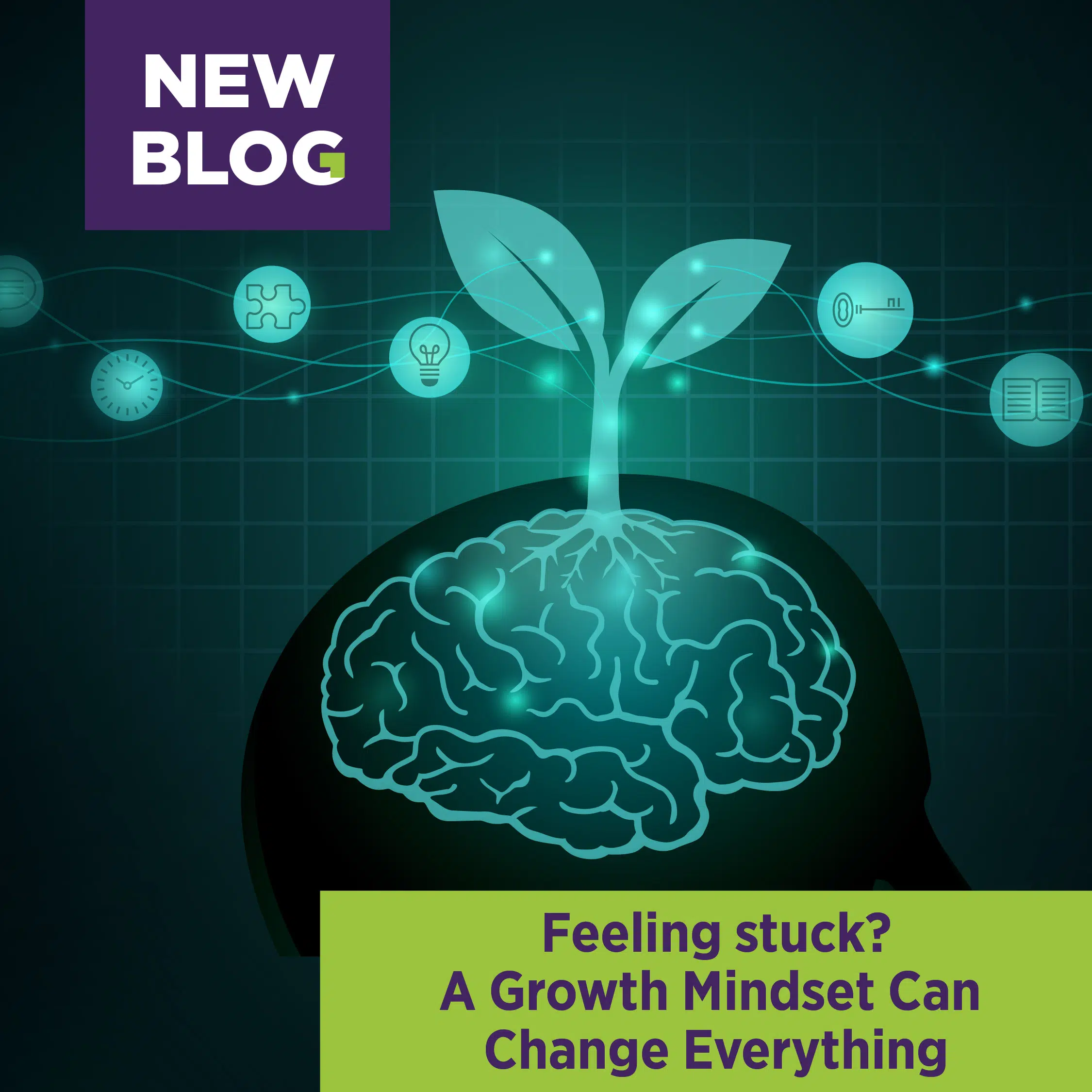
Feeling stuck? A Growth Mindset Can Change Everything
It’s easy to feel dejected when you set a goal and then fail to achieve it. For example:
You know how important it is to pass your upcoming midterm. But you’ve struggled to fully understand some of the concepts that will be on the test. So you cancel your weekend plans and spend your free time studying for the Monday morning test.
But in spite of your extra efforts, you get a poor grade
Of course you’re upset. You may even doubt your ability to end the semester with a passing grade.
But what if you replaced your disappointment and doubt with a Growth Mindset? Instead of looking at your poor test score as a failure, a Growth Mindset helps you see it as an opportunity to learn and grow.
How a simple shift can unlock potential
Growth Mindset is a term coined by Stanford University psychology professor Carol Dweck PhD. With a Growth Mindset you believe that your abilities can be improved through dedication, effort, and a willingness to learn. You see challenges (like a poor test score) as an opportunity for growth.
The shift to a Growth Mindset is an effective way to combat procrastination, feelings of imposter syndrome, and other negative emotions, says Dweck. With a Growth Mindset you’re more willing to take on challenging tasks because you’re eager to try new strategies and improve your results.
You look at failure as a temporary hurdle on your path to success. Instead of beating yourself up, you seek feedback, adapt your study strategies, and use the word “yet” to express potential. “I haven’t fully grasped that concept yet, but with some extra help, I’ll get it.”
So in the example of a poor test score, instead of considering dropping the class, your Growth Mindset would urge you to review your mistakes, meet with your professor, and change your study habits for the next exam.
Are you limited by a Fixed Mindset?
If you typically allow problems and barriers to get in the way of your education, you’re operating under a Fixed Mindset. You may have thoughts like thi
- Failure is proof I have limited abilities.
- I’m either good at something, or I’m not.
- My potential is predetermined.
- I’ll just stick to what I know.
- I guess I’m not cut out for this.
Sound familiar? Responses like these are common when faced with a setback. But thinking in this way limits your potential. It ignores the opportunity that a setback provides.
If you tend to fall into the trap of a Fixed Mindset, don’t give up. Research has shown that you can turn things around.
5 Ways to Strengthen Your Growth Mindset
Your brain has the ability to rewire itself. It’s called neuroplasticity. If you embrace a Growth Mindset, Dweck believes your brain will strengthen existing pathways and form new ones. The result is an improved ability to learn and develop new skills.
Practice these five steps to strengthen your Growth Mindset and rewire your brain:
- Believe that your talents and abilities can grow with dedication and practice.
- Don’t avoid challenges. Look at them as chances to learn and improve.
- Be persistent. View your setbacks as stepping stones to success instead of reasons to quit.
- View hard work as something to value. It’s essential to achieving your goals. Hard work is something to be proud of, not a sign of weakness.
- Think of constructive criticism as valuable information, not a personal attack.
Join us to learn more
At The Chatfield Edge we encourage students to adopt a Growth Mindset. In our March 24, 2026 Let’s Chat webinar we’ll explored Growth Mindset further, and we introduced Creative Problem Solving as a way to help you maintain a Growth Mindset.
Share this article!
