
Recent Posts
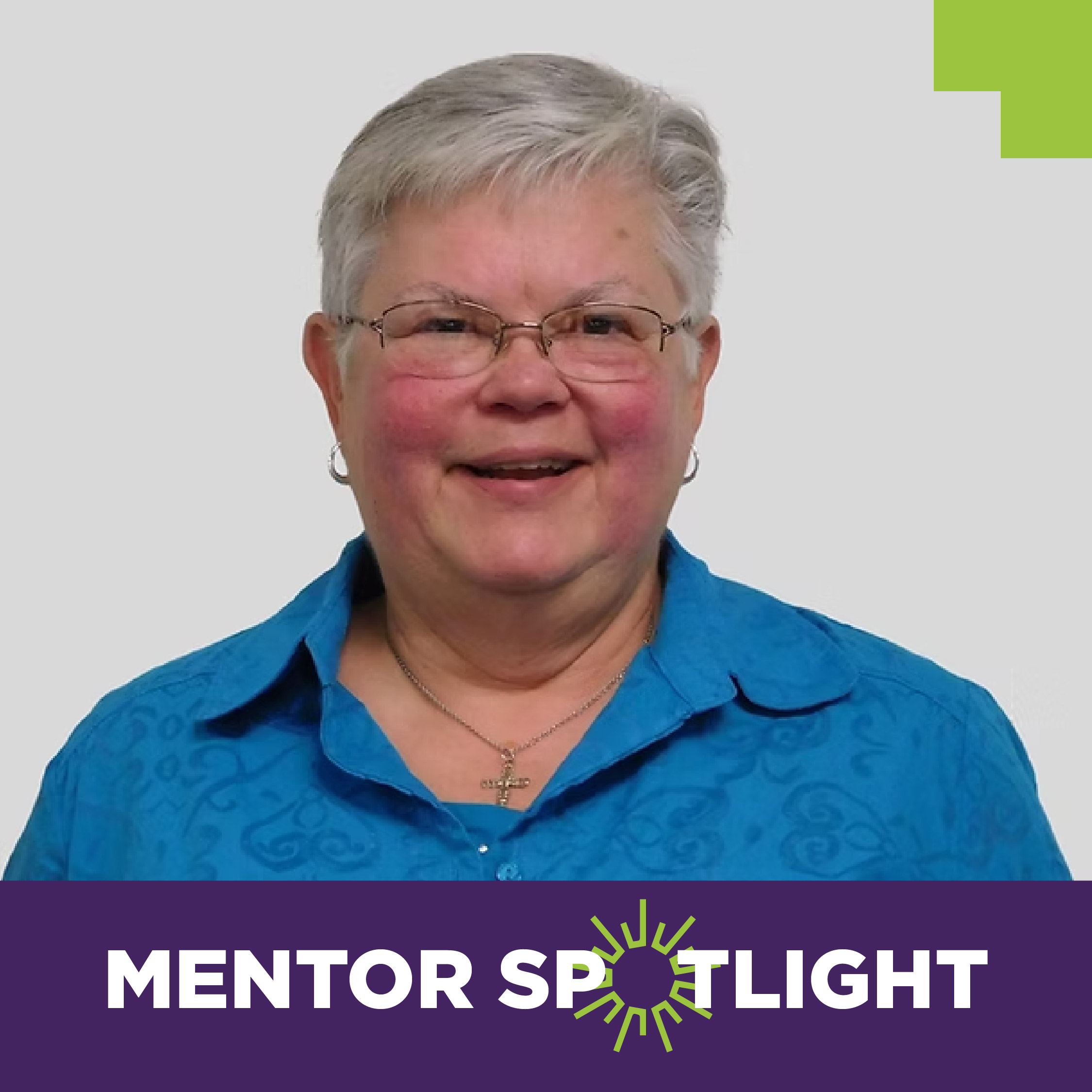
- Mentor Spotlight: Sr. Phyllis Kemper
- Jobs Marked Safe from AI: What Careers are Truly AI-Proof?
- The Chatfield Edge Welcomes Dr. Jeffrey C. Bauer and Craig Roberts to Its Board of Trustees
- Donor Spotlight: Barbara Lyghtel Rohrer
- How the New Workforce Pell Grants are Changing the Game for Trade School Students
Mentor Spotlight: Sr. Phyllis Kemper
For most of her life, Sr. Phyllis Kemper has found herself drawn to people who need someone to believe in them.
It began with the Ursuline Sisters of Brown County, whose joy and example inspired her to enter religious life in 1968. It continued through a career that took her from teaching to nursing, from caring for patients to helping people navigate the challenges that threatened to leave them behind. Today, that lifelong call to serve others has led her to become a mentor atThe Chatfield Edge, where she is once again walking alongside someone who is working to build a better future.
Sr. Phyllis says she knew in her heart that she was called to religious life. “Some of the sisters who taught me were great witnesses of the joy of religious life,” she recalls.
Her path within religious life was anything but predictable. She began as a teacher at Ursuline Academy, eventually teaching home economics, sewing and consumer education. But after several years of teaching, she moved to Brown County, where she helped manage the retreat center and prepare for changes on the Ursuline property. Then, at age 35, she began a new chapter: nursing.
After completing her RN training at The Christ Hospital School of Nursing, Sr. Phyllis went on to work as a medical-surgical nurse, earned a bachelor’s degree in nursing and eventually a master’s degree in community health nursing. Along the way, she discovered where her heart truly belonged.
“I decided I wanted to serve people who were falling between the cracks,” she says.
That desire led her to parish nursing, where she spent 14 years serving communities in Cincinnati, including Over-the-Rhine. She accompanied patients to doctors’ appointments, coordinated care, and worked with people who faced challenges far beyond medical concerns.
Those experiences would later shape the way she approached mentoring.
“I really enjoyed mentoring students because a lot of their issues were not about the actual subjects,” she says of her earlier work with students at the former Chatfield College in Over-the-Rhine. “It was how to overcome the challenges of not having childcare or being up all night with your two-month-old because your wife is working night shift.”
In the spring of 2025, after completing three years as a healthcare moderator, advocating for Ursuline Sisters living at the Mt. Notre Dame Health Center in Reading, Sr. Phyllis was ready for something new. When she attended The Chatfield Edge’s annual scholarship brunch that April, a thought came to her: There is absolutely no reason why I can’t be a mentor.
So, she called and offered her experience to a student pursuing a career in healthcare.
For Sr. Phyllis, mentoring is about much more than academic or career advice. It is about understanding the many obstacles Chatfield Edge students face that she never experienced herself. Her years serving people in the inner city help her better understand their realities, including family responsibilities, financial pressures, and the need to live one day at a time.
Most importantly, she believes mentoring is about helping someone understand that another person truly cares. Building trust takes time and progress is not always linear. A student may miss a meeting, change programs, or struggle to keep in touch. But a mentor cannot be quick to judge.
“As mentors, we haven’t walked in this person’s shoes. It’s important to be non-judgmental and let the person know we really care about them. It’s not just a project we’re doing,” she said.
Her advice to mentors is simple—and powerful: “Don’t give up on them.”
As a mentor with The Chatfield Edge, Sr. Phyllis is continuing a lifetime of ministry—one that has taken many forms but has always centered on people. Shaped by sisters, teachers, patients, and mentors who helped her discover her own path, she is offering that same gift to someone else: the reassurance that someone cares, someone is listening, and someone will not give up.
And perhaps that is what a mentor does best—not telling another person exactly where to go but walking beside them as they find the way forward.
The Chatfield Edge is growing and welcomes more mentors to accompany its first-generation and non-traditional students who are enrolled in college, trade school, and certificate programs. We provide training for our mentors who meet with students about four times each semester to encourage them along their path to gain success in life through education. To find out more or to sign up to be a mentor, contact David Hesson, Director of Programs, at david.hesson@chatfieldedge.org or call 513-875-3956.
Share this article!
